Become a Health Detective for Your Cat

"Like wild animals, cats may feel the need to cover their illness so they’re not viewed as being vulnerable," says Marie S. McCabe, DVM, vice president of the Human Animal Bond Division with the American Humane Association. Knowing your cat by sight and touch can help you understand what "normal" is. Here are six clues that your cat could be under the weather.
Clue No. 1: Weight Change
For most cats, weight loss isn’t normal and can signal illness, says India Lane, DVM, associate professor of medicine at the University of Tennessee College of Veterinary Medicine in Knoxville, Tenn. Weight gain in cats is usually associated with excess food.
While your veterinarian can help you to determine what is normal for your particular cat’s breed and age, you can also observe your pet’s body. First, look at your cat from above. You should see a waistline. Now view your cat from the side and see if the belly hangs. In a normal-weight cat, there should be no hang. Next, put your hands on your cat’s back and make sure you can feel the ribs.
Clue No. 2: Unkempt Coat
When cats are nervous, they often raise the fur of their coats and shed excessively. If that’s the case, a change in the environment – such as a big move – could be stressing your cat, says McCabe. If your cat has stopped grooming and the coat looks clumpy or flaky, that may be cause for concern, as cats are normally fastidious groomers.
Clue No. 3: Pale Gums and Bad Breath
Checking your cat’s gums and teeth regularly can help you spot changes more easily. Pale gums, or paleness in the ears or around the eyeballs – for cats with black gums – can signify illness. This subtle color change can indicate poor circulation and disease. In addition, check the teeth and make sure there is no plaque or tartar. Another illness tip-off? Unpleasant-smelling breath that doesn’t come from something you’ve put in the food bowl.
Clue No. 4: Dilated Eyes
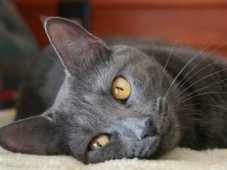
Gaze into your cat’s eyes. You should see similar-sized pupils that aren’t dilated. With some illnesses, the pupils can dilate and remain dilated, says Lane. One pupil may even appear to be slightly larger than the other.
Clue No. 5: Shallow, Quick Breathing
Respiratory problems can be another red flag for health woes, but you often have to watch cats closely to know they’re having problems. In retrospect, you may realize that your cat has been hiding or hunched up, with its breathing shallow but quick.
Clue No. 6: Behavioral Changes
While the above clues deal with bodily changes, behavioral changes may also alert you to problems. For instance, something could be awry if your cat is urinating or defecating outside the litter box, straining in the litter box, hiding in odd places, not interacting with family members, becoming aggressive or irritable, or bouncing off the walls.
Even with these clues at your fingertips, how do you know when you need to call for expert medical help? Lane says three of the aforementioned things should drive you to the veterinarian’s office immediately: breathing difficulties, changes in the pupils, and straining to urinate or defecate. Otherwise, watch your cat for a few days. If you still suspect a problem, call your veterinarian without delay.