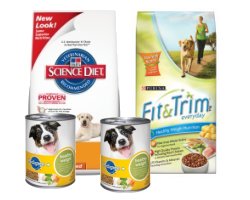
Weight Loss Pet Foods Not Consistent
With almost 50% of domestic animals being overweight or obese, weight-loss diets are becoming increasingly popular in the pet food industry, and this is illustrated by the choice available to consumers. A new study, carried out by Lisa M. Freeman, professor of nutrition, and Deborah E. Linder, DVM, of the Cummings School of Veterinary Medicine at Tufts University, and published in this month’s Journal of the American Veterinary Medical Association, indicates that these diets will have varying results for pets.
The study examined nearly 100 commercially available diets with weight management claims. Among the report’s findings is that dry dog foods range in calorie density from 217 to 440 kilocalories per cup (kcal/cup) and a recommended intake that ranged from 0.73 to 1.47 times the dog’s resting energy requirement. The diets also varied wildly in price – from 4 cents to more than $1.10 per kilocalorie. Similar findings were made in wet dog food (189 to 398 kcal/can) and cat food (235 to 480 kcal/cup) marketed for weight control.
"There is so much information – and misinformation – about pet foods, it’s understandable that people are confused about what to feed their dogs and cats," said Freeman. "To counteract these myths, people are accustomed to turning to the labels on food – but, as this study shows, packaging might not always be a reliable source of information."
Under federal guidelines, pet foods labeled with the "lite", "light" or "low-calorie" designations must provide the caloric content, and must adhere to a maximum kilocalorie per kilogram. More than half of the foods evaluated in this study exceeded the maximum. Based on feeding recommendations of these brands, most of the diets would not lose weight or would actually gain weight if owners adhered to the labels’ feeding guidelines.